

How to Extend the Service Life of Hydraulic Seals and Perform Proper Maintenance
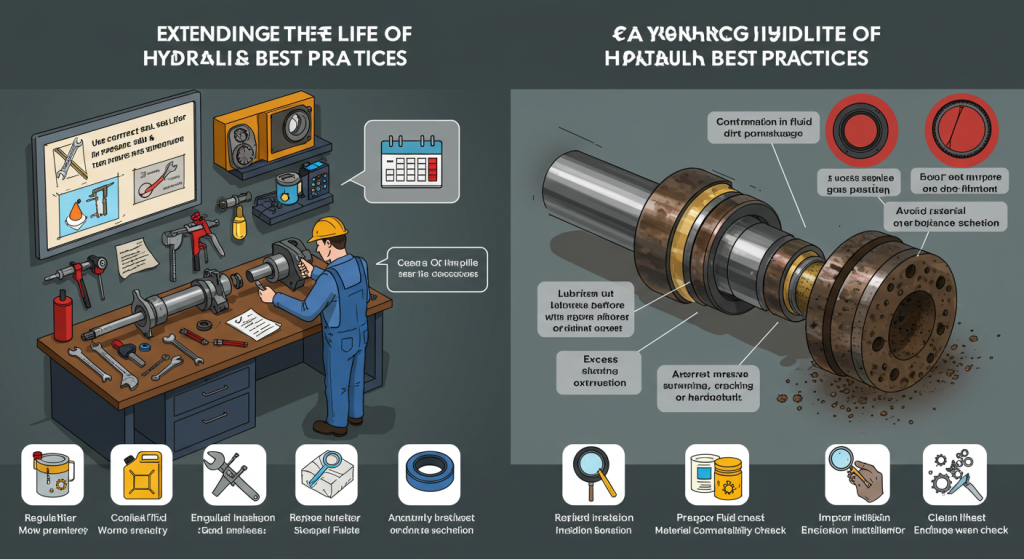
Hydraulic seals are vital components in hydraulic systems, ensuring fluid containment and pressure maintenance in equipment like excavators, hydraulic breakers, and industrial presses. Operating under high pressure, extreme temperatures, and constant motion, seals are susceptible to hydraulic seal failure, leading to leaking hydraulic seals, reduced performance, and costly downtime. For equipment owners, technicians, and fleet managers in construction, mining, and industrial sectors, extending hydraulic seal life through proper maintenance is essential to maximize reliability, safety, and cost savings.
Effective hydraulic seal maintenance can extend seal life by 20–50%, reducing repair costs by thousands, as seen in a case where proactive maintenance saved a quarry $6500 on a breaker repair. This guide outlines practical strategies to prolong seal life and maintain hydraulic systems, with a hydraulic maintenance checklist, real-world insights, and quality solutions from JSP Seal Kits. Whether you’re managing a fleet or a single machine, these steps will help prevent damaged hydraulic seals and keep your equipment running smoothly.
Why Extending Seal Life Matters
Hydraulic seals typically last 2–5 years or 5000–10000 hours, but poor maintenance can halve this lifespan, leading to frequent hydraulic fluid leaks and system failures. Common seal failure causes include contamination, improper installation, fluid incompatibility, and overpressure, each causing issues like abrasion, extrusion, or hardening. For example, a contaminated seal in an excavator caused a $12,000 downtime loss, which could have been avoided with a $250 wiper seal replacement. Proper maintenance not only extends seal life but also prevents environmental hazards, such as a $20,000 fine from a loader fluid spill. By adopting proactive hydraulic seal maintenance, you can reduce failure rates by up to 80%, based on industry studies, saving significant repair and operational costs.
Strategies to Extend Hydraulic Seal Life
Below are detailed strategies to maximize the service life of hydraulic seals, with practical steps and real-world applications to prevent leaking hydraulic seals and ensure system reliability.
Select the Right Seal
Choosing seals that match your system’s pressure, temperature, fluid type, and environmental conditions is critical to prevent seal failure causes like material degradation or extrusion. A mismatched seal in a high-heat breaker can harden within months, causing leaks.
- Steps:
- Verify seal specifications: Ensure pressure ratings (e.g., 5000 PSI for high-pressure systems), temperature tolerance (e.g., Viton for >80°C), and fluid compatibility (e.g., NBR for mineral oils, PTFE for aggressive chemicals).
- Consult the equipment manual or a trusted supplier like JSP Seal Kits, which offers seals for brands like Soosan, Atlas Copco, and Furukawa.
- Use abrasion-resistant materials like polyurethane for dusty construction or mining sites.
- Example: A mining firm switched to Viton seals for a high-temperature breaker, extending seal life from 1 to 3 years, saving $2000 in annual replacements.
- Impact: Proper seal selection extends life by 20–30%, reducing replacement frequency and costs.
Follow Proper Installation Practices
Incorrect installation, such as misalignment or pinching, causes 20–30% of hydraulic seal failure, leading to immediate hydraulic fluid leaks or premature wear.
- Steps:
- Depressurize the system and follow lockout-tagout protocols before hydraulic seal replacement.
- Use clean, non-metallic tools (e.g., seal picks, installation cones, $20–$100) to avoid scratching surfaces. Clean the seal groove with a lint-free cloth and compatible solvent to remove debris.
- Apply a thin layer of compatible seal lubricant to ease installation and reduce friction. Avoid over-lubrication, which attracts contaminants.
- Ensure correct seal orientation (e.g., lip seals facing the pressure side) and press evenly into the groove without twisting. Use a torque wrench ($50–$200) to tighten bolts to specifications.
- Source precise-fit seal kits from JSP Seal Kits for breaker seal maintenance.
- Example: A contractor avoided a $5000 excavator repair by training technicians to install rod seals correctly, preventing misalignment.
- Impact: Proper installation extends seal life from months to years, reducing failure risk.
Maintain Fluid Quality and Cleanliness
Contaminated or degraded fluid causes abrasion, swelling, or damaged hydraulic seals, reducing life by up to 50%. Dirt, water, or metal particles score seals, while incompatible fluids cause chemical degradation.
- Steps:
- Replace fluid and filters every 1000 hours or per the manual. Use high-efficiency filters (10-micron, $20–$50) in dusty environments.
- Conduct fluid analysis every 1000 hours ($50–$100 per test) to detect contaminants like metal or water, which signal seal wear.
- Use fluid compatible with seal materials (e.g., mineral oil with NBR, synthetic fluids with Viton). Avoid mixing fluids.
- Keep reservoirs sealed and use clean containers during refills to prevent contamination.
- Example: A quarry’s regular fluid changes prevented a $6500 breaker pump repair by avoiding contamination-related seal failure.
- Impact: Clean fluid extends seal life by 30–40%, minimizing abrasion and chemical damage.
Replace Wiper Seals Proactively
Wiper seals block external contaminants like dust or sand, which abrade primary seals and cause leaking hydraulic seals. Worn wiper seals in dusty sites can halve primary seal life.
- Steps:
- Inspect wiper seals every 500 hours for tears or debris buildup. Replace every 500–1000 hours using kits from JSP Seal Kits.
- Clean the rod surface with a lint-free cloth before installing new wiper seals to remove dirt.
- Choose robust materials like polyurethane for harsh environments.
- Example: A construction firm saved $2000 by replacing wiper seals every 500 hours, protecting a rod seal from abrasion.
- Impact: Proactive wiper seal replacement prevents primary seal damage, saving $1000–$2000 per repair.
Control Operating Conditions
Operating beyond a seal’s pressure or temperature limits causes extrusion, hardening, or rod seal failure, shortening life significantly.
- Steps:
- Monitor pressure with gauges or sensors ($100–$500) to avoid spikes beyond seal ratings. Install pressure relief valves.
- Check component temperatures every 500 hours with an infrared thermometer ($30–$150), ensuring they stay within limits (e.g., <80°C for NBR). Fix cooling issues like clogged radiators.
- Train operators to avoid overloading equipment, which increases pressure and heat.
- Example: A mining operation fixed cooling issues in a breaker, preventing seal hardening and saving $6500 in repairs.
- Impact: Optimal conditions extend seal life by 25–35%, preventing costly failures.
Store Seals Properly
Improper storage exposes seals to UV light, ozone, or heat, causing cracking or hardening before use, reducing life by 50%.
- Steps:
- Store seals in sealed, original packaging in a cool (15–25°C), dark, dry environment, away from sunlight or ozone sources.
- Use climate-controlled storage for long-term spares in extreme climates.
- Rotate stock to use older seals first, within their shelf life (5–10 years for rubber seals).
- Example: A contractor avoided early failures by storing seals in a dark warehouse, saving $500 in replacements.
- Impact: Proper storage ensures seals perform as expected, avoiding premature hydraulic seal failure.
Implement Condition Monitoring
Real-time monitoring detects early signs of hydraulic seal failure, like pressure drops or overheating, allowing timely intervention.
- Steps:
- Install condition-monitoring systems ($1000–$5000) to track pressure, temperature, and fluid quality. A 5% pressure drop signals seal wear.
- Use thermal cameras ($300–$1000) to spot hot spots (e.g., a cylinder at 90°C vs. 70°C) from failing seals.
- Schedule fluid sampling every 1000 hours ($50–$100) to detect contaminants or wear particles.
- Example: A mining firm saved $10,000 by detecting a slow leak with a pressure sensor, avoiding a major repair.
- Impact: Monitoring extends seal life by 20–30%, reducing unexpected failures.
Hydraulic Seal Maintenance Checklist
Regular maintenance is key to extending hydraulic seal life. The table below summarizes essential tasks, frequencies, and tools for a hydraulic maintenance checklist.
| Maintenance Task | Steps | Frequency | Tools Needed | Estimated Cost |
|---|---|---|---|---|
| Inspect Seals | Check for leaks, cracks, or swelling with flashlight or UV dye. | Every 500 hours or monthly | Flashlight, UV leak detection kit ($100), inspection mirror | $50–$100 (dye, labor) |
| Replace Fluid/Filters | Change fluid and filters; use clean containers. | Every 1000 hours | High-efficiency filters ($20–$50), fluid sampling kit ($50) | $100–$300 (fluid, filters) |
| Replace Wiper Seals | Inspect and replace wiper seals; clean rod surface. | Every 500–1000 hours | Seal installation kit ($20–$100), lint-free cloths | $50–$150 (seals, labor) |
| Monitor Pressure/Temp | Check pressure and temperatures; fix cooling issues. | Every 500 hours | Pressure gauges ($100), infrared thermometer ($30–$150) | $100–$500 (sensors) |
| Train Technicians | Teach seal installation and maintenance techniques. | Annually | Training materials, practice seal kits | $500–$1000 (course) |
| Schedule Seal Replacement | Replace seals proactively; track in maintenance log. | Every 2–5 years or 5000–10000 hours | Maintenance log, condition-monitoring system ($1000–$5000) | $200–$500 (seals) |
Impact: Following this checklist prevents 80% of seal failures, saving $1000–$20,000 per incident, based on industry data.
Proper Maintenance Practices
Below are detailed maintenance practices to complement the strategies above, ensuring seals and systems remain in top condition.
Regular Inspections
- Steps: Inspect seals, rods, and housings every 500 hours for leaking hydraulic seals, cracks, or scoring. Use UV leak detection dye to spot subtle leaks. Check wiper seals for wear and fluid for contamination (cloudy or metallic). Monitor temperatures with an infrared thermometer for overheating.
- Frequency: Every 500 hours or monthly for high-use equipment.
- Example: A construction firm caught a slow leak early, saving $2000 on a rod seal repair.
- Impact: Early detection reduces repair costs by 80%.
Fluid and Filter Maintenance
- Steps: Replace fluid and filters every 1000 hours, using high-efficiency filters in dusty sites. Conduct fluid analysis to detect contaminants. Use clean containers for refills and verify fluid compatibility.
- Frequency: Fluid/filter changes every 1000 hours; analysis every 1000–2000 hours.
- Example: A quarry’s fluid analysis prevented a $6500 pump repair from contamination.
- Impact: Clean fluid extends seal life by 30–40%.
Wiper Seal Replacement
- Steps: Inspect wiper seals every 500 hours and replace every 500–1000 hours. Clean rods before installation. Use durable seals from JSP Seal Kits for breaker seal maintenance.
- Frequency: Every 500–1000 hours.
- Example: A mining firm saved $1000 by replacing wiper seals proactively.
- Impact: Protects primary seals, saving $1000–$2000.
Pressure and Temperature Monitoring
- Steps: Monitor pressure with sensors and temperatures with thermal cameras every 500 hours. Address overpressure or overheating issues promptly.
- Frequency: Every 500 hours.
- Example: A breaker’s cooling fix prevented seal hardening, saving $6500.
- Impact: Prevents 25–35% of failures.
Technician Training
- Steps: Train technicians annually on hydraulic seal replacement and maintenance. Teach operators to report signs of hydraulic seal failure like sluggish performance.
- Frequency: Annual training; operator refreshers every 6 months.
- Example: A contractor’s trained staff avoided a $5000 repair from improper installation.
- Impact: Reduces errors by 50%.
Seal Replacement Scheduling
- Steps: Replace seals every 2–5 years or 5000–10000 hours. Track replacements in a log and use condition-monitoring data to adjust schedules.
- Frequency: Every 2–5 years.
- Example: A mining firm’s scheduled replacements saved $10,000 in downtime.
- Impact: Prevents sudden failures, saving $5000–$20,000.
Safety Considerations
Maintenance and hydraulic seal replacement require strict safety protocols:
- Depressurize Fully: Release pressure to avoid fluid spray injuries.
- Use PPE: Wear gloves, safety glasses, and protective clothing.
- Follow Lockout-Tagout: Isolate equipment to prevent startup.
- Dispose Properly: Handle old seals and fluid per regulations to avoid fines, as seen in a $20,000 loader spill case.
Real-World Impact
Proper maintenance saves significant costs:
- Excavator Case: Wiper seal replacement ($250) prevented a $12,000 downtime loss.
- Breaker Case: Fluid analysis ($500) avoided a $6500 pump repair.
- Environmental Case: Leak detection ($200) could have saved a $20,000 fine.
Where to Get Quality Seal Kits
For reliable hydraulic seal maintenance, JSP Seal Kits offers high-quality seal kits for construction, mining, and industrial equipment. Their seals, made from Viton, NBR, polyurethane, and PTFE, support brands like Soosan and Furukawa, with fast shipping and expert support for breaker seal maintenance. Contact their team to ensure compatibility and extend seal life.
Frequently Asked Questions
How long do hydraulic seals last with maintenance?
3–5 years or 5000–10000 hours, compared to 1–2 years without care.
What’s the most common seal failure cause?
Contamination (30–40%), followed by improper installation and fluid incompatibility.
How often should I inspect seals?
Every 500 hours or monthly for high-use equipment.
Can maintenance prevent all failures?
No, but it reduces failures by 80%, saving $1000–$20,000 per incident.
Conclusion
Extending hydraulic seal life through proper maintenance prevents hydraulic seal failure, leaking hydraulic seals, and costly downtime. By selecting compatible seals, ensuring proper installation, maintaining fluid quality, and following a hydraulic maintenance checklist, you can extend seal life by 20–50% and save thousands. Quality seals from JSP Seal Kits, combined with condition monitoring and training, ensure reliability in construction, mining, and industrial applications. Act now to protect your equipment and download our free “Hydraulic Seal Maintenance Checklist” from JSP Seal Kits for a practical guide to long-lasting seals.
